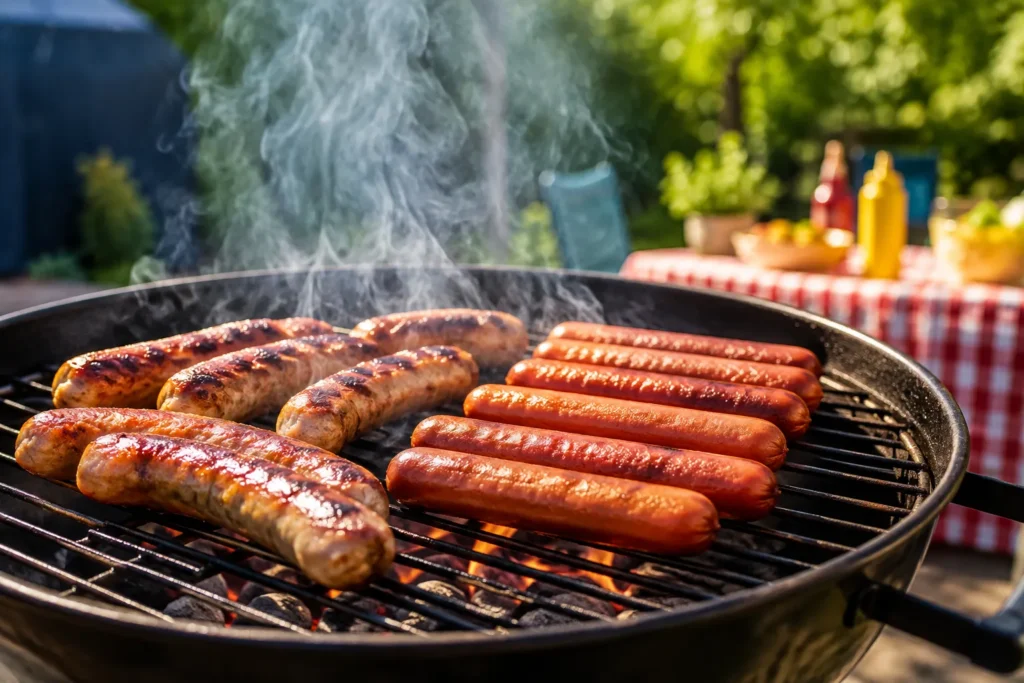
To grill hot dogs without splitting them, preheat the grill to medium heat, about 350–400°F (175–205°C). Cook fully cooked hot dogs for 5–7 minutes, turning every 1–2 minutes, until evenly browned and steaming hot. Toast the buns cut-side down for the final 30–60 seconds.
Quick grilling guide
- Grill temperature: Medium heat, roughly 350–400°F (175–205°C)
- Cooking time: 5–7 minutes for fully cooked hot dogs
- Turning: Every 1–2 minutes
- Buns: Toast cut-side down for 30–60 seconds
- Best sign they are ready: Evenly browned, lightly blistered, and steaming hot inside
The USDA advises reheating fully cooked meats, including hot dogs, to 165°F (74°C) or until steaming hot. People at higher risk of foodborne illness should always reheat hot dogs until steaming hot.
What Do You Need to Grill Hot Dogs?
You can grill hot dogs on charcoal, gas, or an electric grill. The fuel changes the flavor, but the basic method stays the same.
- Fully cooked hot dogs
- Hot dog buns
- Long-handled tongs
- A clean grill grate
- A small amount of neutral cooking oil
- Your preferred toppings and sauces
Choose hot dogs that fit the buns without hanging far over the ends. Beef, pork, chicken, turkey, and plant-based varieties all work, although cooking times and browning can vary. Check the package because raw sausages must be handled differently from fully cooked hot dogs.
How Do You Grill Hot Dogs Step by Step?
1. Preheat the grill
Set a gas grill to medium or prepare a charcoal grill with an even layer of hot coals. Let the grate heat for about 10 minutes. A properly heated grate gives you better browning and reduces sticking.
For charcoal, arrange the coals so one side is hotter than the other. This creates a two-zone setup: direct heat for browning and a cooler area where you can move the hot dogs if they begin coloring too quickly.
2. Clean and lightly oil the grate
Brush away residue from the grate. Fold a paper towel, dip it lightly in oil, hold it with long tongs, and wipe it across the grate. Do not pour oil directly onto the fire.
3. Add the hot dogs
Place the hot dogs perpendicular to the grill bars. Leave a little space between them so you can turn each one easily. There is no need to pierce them; holes allow moisture and flavor to escape.
4. Grill for 5 to 7 minutes
Turn the hot dogs every minute or two, giving each side time to brown. Keep the lid open if the grill is running hot and you need to watch for flare-ups. On a moderate gas grill, you can close the lid briefly between turns to hold the heat.
If the casings begin splitting, move the hot dogs to the cooler side. Splitting usually means the heat is too aggressive or they have stayed in one position too long.
5. Toast the buns
During the final minute, place the buns cut-side down around the cooler edge of the grill. Check them after 30 seconds. They can go from golden to burnt quickly, especially over charcoal.
How Do You Get Better Grill Marks?
Start with a hot, clean grate and avoid constantly rolling the hot dogs. Let one side make contact for about a minute, turn it a quarter turn, and repeat. You want several narrow browned lines rather than one black strip.
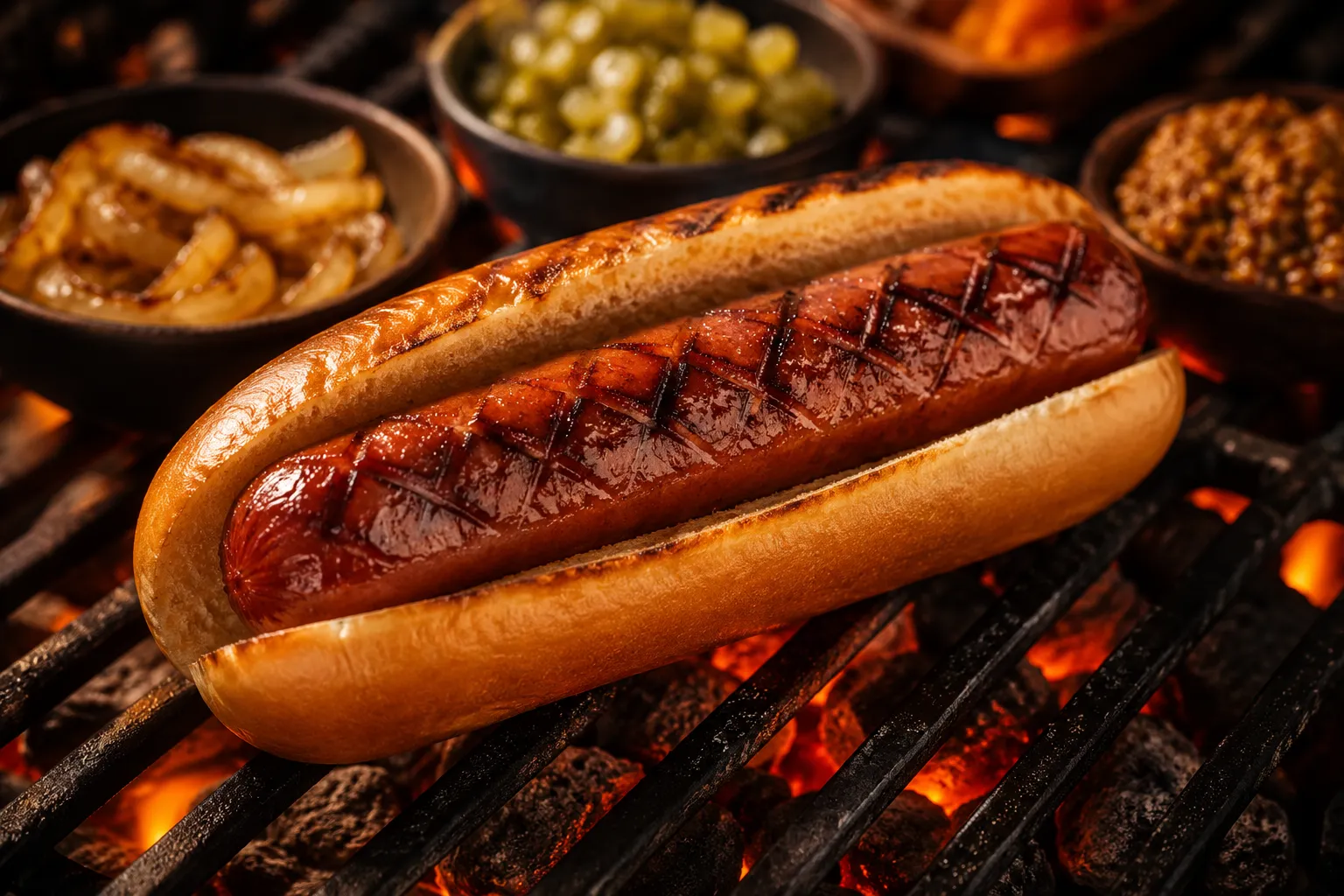
Butterflying a hot dog—cutting it lengthwise without slicing all the way through—creates more browned surface area. It also gives toppings a shallow channel to sit in. Because the opened hot dog cooks quickly, use medium heat and watch it closely.
Is Charcoal or Gas Better for Hot Dogs?
Charcoal adds a stronger smoky flavor, while gas gives you faster setup and easier heat control. Neither is automatically better. Use charcoal when you want a cookout flavor and gas when speed and consistency matter most.
For charcoal, wait until the coals are mostly covered with pale ash before cooking. For gas, preheat the grill with the lid closed, then reduce it to medium before adding the hot dogs. For more outdoor-cooking ideas, browse the Cyber-Dogs Grilling section.
What Are the Best Hot Dog Toppings?
The best toppings balance salt, acidity, sweetness, heat, and crunch. Pick two or three that work together instead of loading on everything at once.
| Style | Toppings |
|---|---|
| Classic | Yellow mustard, ketchup, relish, and diced onion |
| Chili cheese | Beef or bean chili, shredded cheddar, and sliced scallions |
| Cookout | Grilled onions, barbecue sauce, and crunchy slaw |
| Spicy | Jalapeños, pepper jack, pickled onion, and chipotle sauce |
| Fresh | Diced tomato, avocado, red onion, cilantro, and lime |
| Vegetarian | Plant-based hot dog, mustard, sauerkraut, and crispy onions |
How Do You Grill Raw Sausages Safely?
Raw sausages are not the same as fully cooked hot dogs. They need more time and must reach a safe internal temperature. Grill them over moderate heat, turning regularly, and check the center with a food thermometer.
Thick raw sausages often cook more evenly over indirect heat. Brown them briefly over the hot side, move them to the cooler side, close the lid, and cook until they reach the correct internal temperature. There is no need to parboil them if you control the grill temperature properly.
What Are the Most Common Hot Dog Grilling Mistakes?
Using heat that is too high
Very high heat blackens the outside before the center is hot. Medium heat gives you more control and more even browning.
Poking holes in the casing
Piercing the hot dogs releases moisture. Use tongs rather than a fork, and let the casing remain intact.
Walking away from the grill
Hot dogs cook quickly. Stay nearby and turn them regularly, particularly when fat dripping onto charcoal causes flare-ups.
Forgetting the buns
A cold, soft bun can make a well-grilled hot dog feel unfinished. A quick toast adds texture and helps the bun hold sauces without becoming soggy.
Treating every sausage like a hot dog
Most packaged hot dogs are already cooked. Fresh sausages are raw and require longer cooking plus a temperature check. Always read the label.
How Should You Serve and Store Leftovers?
Set out toppings in small bowls so everyone can build their own. Easy sides include coleslaw, potato salad, corn on the cob, grilled vegetables, pickles, or a simple green salad.
Refrigerate leftover hot dogs within two hours, or within one hour when the outdoor temperature is above 90°F (32°C). Store them in a covered container and use them within three to four days. Reheat leftovers until hot throughout.
Frequently Asked Questions
How long should hot dogs stay on the grill?
Fully cooked hot dogs generally need 5 to 7 minutes over medium heat. Turn them every minute or two so they brown evenly.
Should you close the grill lid?
Either method works. Closing the lid briefly helps hold a steady temperature; leaving it open makes it easier to watch for flare-ups. The important points are moderate heat and frequent turning.
How do you stop hot dogs from splitting?
Do not pierce them, avoid very high heat, and turn them regularly. Move them to indirect heat if the casings start to split.
Can you grill frozen hot dogs?
Thawing them first gives more even results. If you must grill from frozen, begin over indirect heat and allow extra time before finishing over direct heat.
Can plant-based hot dogs be grilled the same way?
Usually, yes, but some plant-based products brown or dry out faster. Lightly oil the grate and follow the timing on the package.
Keep the Heat Moderate
The secret to hot dogs on the grill is control, not complicated equipment. Keep the heat at medium, turn them often, toast the buns at the end, and choose toppings that add contrast. In less than 10 minutes, you can serve hot dogs with crisp edges, juicy centers, and far more flavor than boiling alone can provide.
Sources and Review
Food-safety guidance was checked on September 3, 2026, against USDA Hot Dogs and Food Safety, FoodSafety.gov Safe Minimum Internal Temperatures, and USDA Leftovers and Food Safety.
Pingback: Hot Dogs in Air Fryer: Time & Temperature | Cyber-Dogs
Pingback: 15 Easy Hot Dog Recipes for Dinner | Cyber-Dogs
Pingback: Hot Dogs and Burgers: Easy Cookout Menu | Cyber-Dogs
Pingback: 25 Hot Dog Toppings for Any Cookout | Cyber-Dogs
Pingback: Why Do Hot Dogs Split When Cooking? Causes & Fixes